
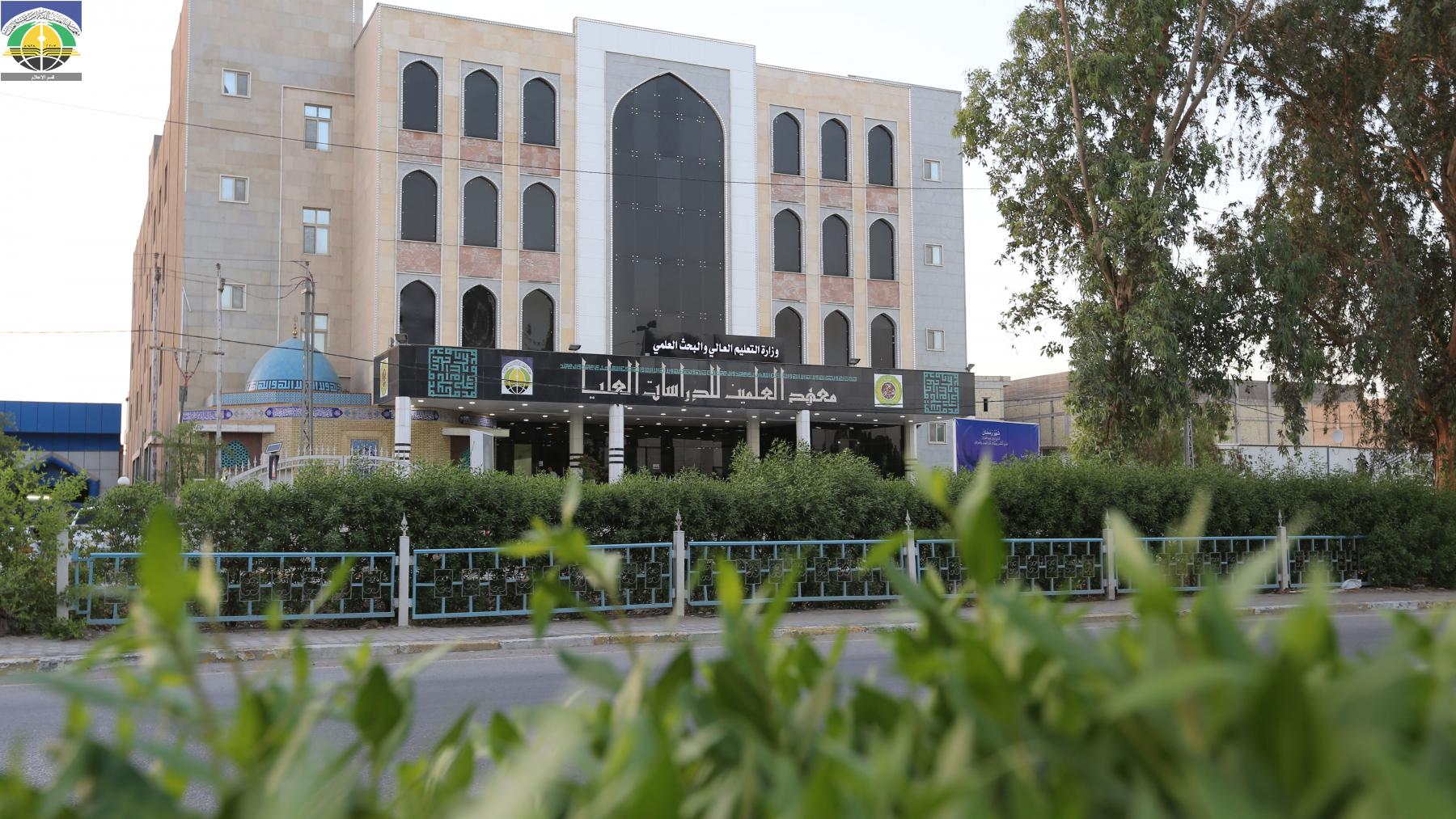
For decades, the city of Najaf has suffered from the absence of an academic institution capable of linking a millennium of scholarly heritage from the historic University of Najaf with other universities, in order to advance the Islamic intellectual system and direct it toward serving the scientific and religious objectives of Najaf, Iraq, and the wider region. This need has become even more pressing in light of the political and social transformations witnessed in Iraq since the fall of the former regime.
The aim was to shed light on the principles of moderation and strength inherent in the intellectual tradition of the Najaf seminary, and to translate them into cultural and political frameworks capable of guiding national affairs in directions consistent with Islamic and Arab values, while safeguarding our national identity.
From this vision emerged the idea of establishing Al-Alamain Institute for Graduate Studies, to contribute—albeit modestly—to filling this gap by offering advanced studies and preparing qualified cadres in Iraqi political thought. These graduates, holding higher academic degrees, would be capable of contributing effectively to nation-building. At the same time, the Institute seeks to provide Iraq and its cultural institutions with research and forward-looking perspectives that can strengthen the national movement, promote peaceful coexistence in the region, and drive progress and stability.
The concept of Al-Alamain Institute for Graduate Studies represents a vital link between our rich Islamic heritage—absorbed by Islamic schools across the Arab world, including the Najaf seminary—and the presentation of a moderate Islamic thought that aspires to unity of ranks, unity of stance, and unity of word.
Accordingly, the first stage of the Institute’s mission is to address Iraq’s urgent needs in the fields of political science, law, and economics. With the support of Arab and Islamic institutions, as well as political and cultural figures, the Institute aims to achieve its objectives and evolve—beyond its academic role—into a center that attracts Arab and Islamic intellectual energies. It will serve as a platform for constructive dialogue that fosters unity, stability, and civil peace, in line with an Islamic vision rooted in rationality, moderation, reasoned debate, and evidence-based discourse.